
STATE HIGHWAYS
WSDOT
Uses solid salt and several liquid chloride-based products as part of winter operations.
Yes — Washington uses winter road treatments that include salt-based and other chloride-based materials. Roads can also be treatedbefore you ever see snow.
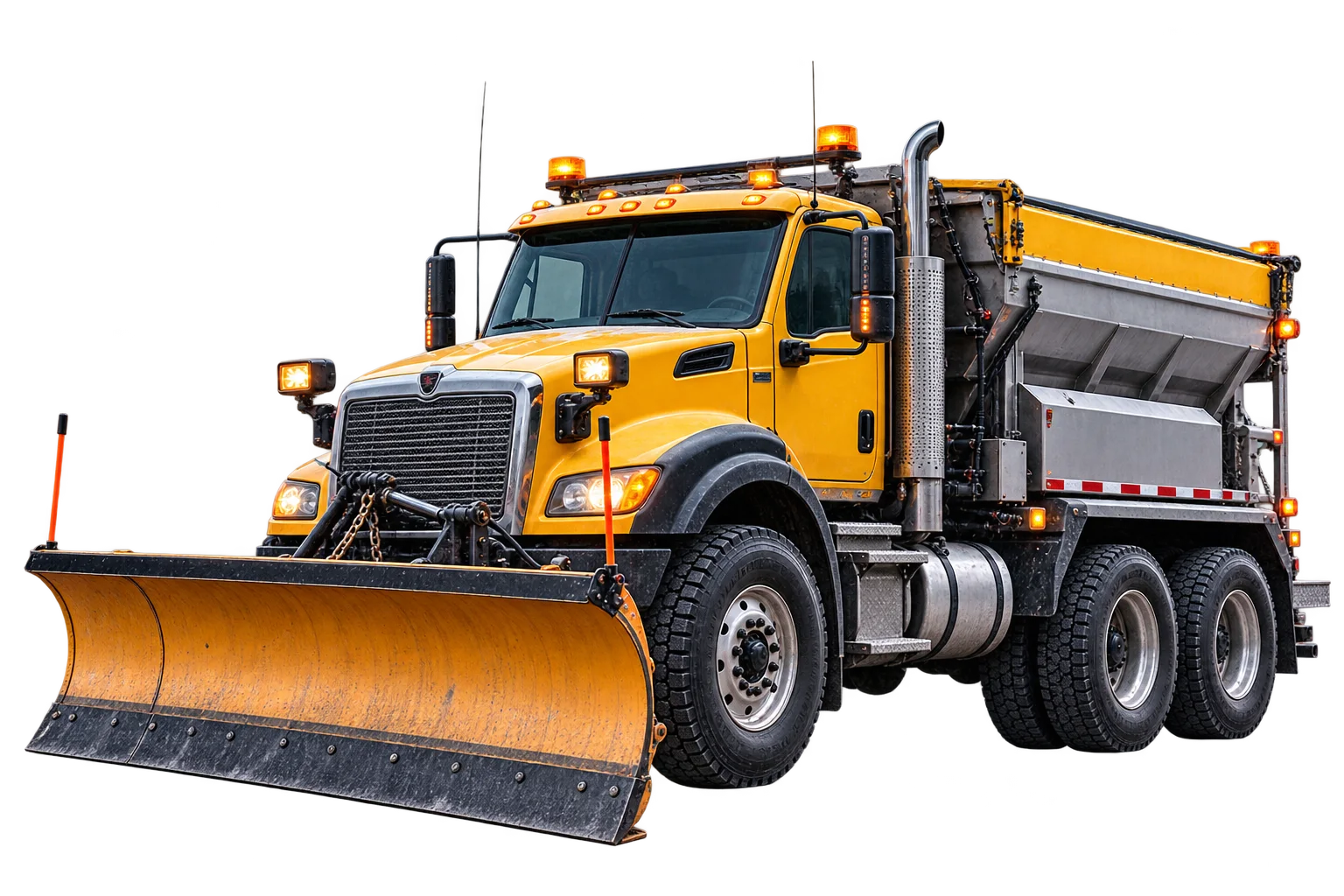
More accurately, winter road crews can use several different materials — including solid sodium chloride, liquid chloride-based anti-icers and sand or abrasives, depending on the road system and conditions.
Uses solid salt and several liquid chloride-based products as part of winter operations.
Documents sodium chloride brine for anti-icing, plus sand under some conditions.
Tacoma and Sumner document salt-based treatment. Local winter practices vary by jurisdiction.
Different winter materials do different jobs. Choose one to see what crews are trying to accomplish.
Liquid chloride treatment can be applied before snow or ice begins so frozen precipitation is less likely to bond tightly to the pavement.
A winter vehicle can collect several kinds of contamination at the same time.
Water from wet pavement is lifted by tires and thrown onto lower body panels.
Dissolved chloride-based treatment can remain as pale residue after the water dries.
Traction material and normal road debris can become part of the same winter buildup.
Mud, traffic grime and other contamination mix with wet winter road spray.
Drag across the vehicle to move from a clean finish through road film to a heavier treated-road residue reference.
No visible winter road buildup.



Different agencies maintain different road systems, so winter treatment practices depend on jurisdiction. These are examples we found documented locally.
The County documents sodium chloride brine for anti-icing and sand for traction.
Tacoma documents salt-brine application before frost forms in selected areas.
Sumner has documented a salt-and-water deicer applied before freezing.
Current de-icing operations are documented. Salt use is also documented historically.
Anti-icing can happen before snow or frost, so wet or mostly clear pavement may already have chloride-based treatment on it.
Winter film is visible on paint, but chloride-related corrosion concerns are especially relevant to exposed metal and underbody areas.
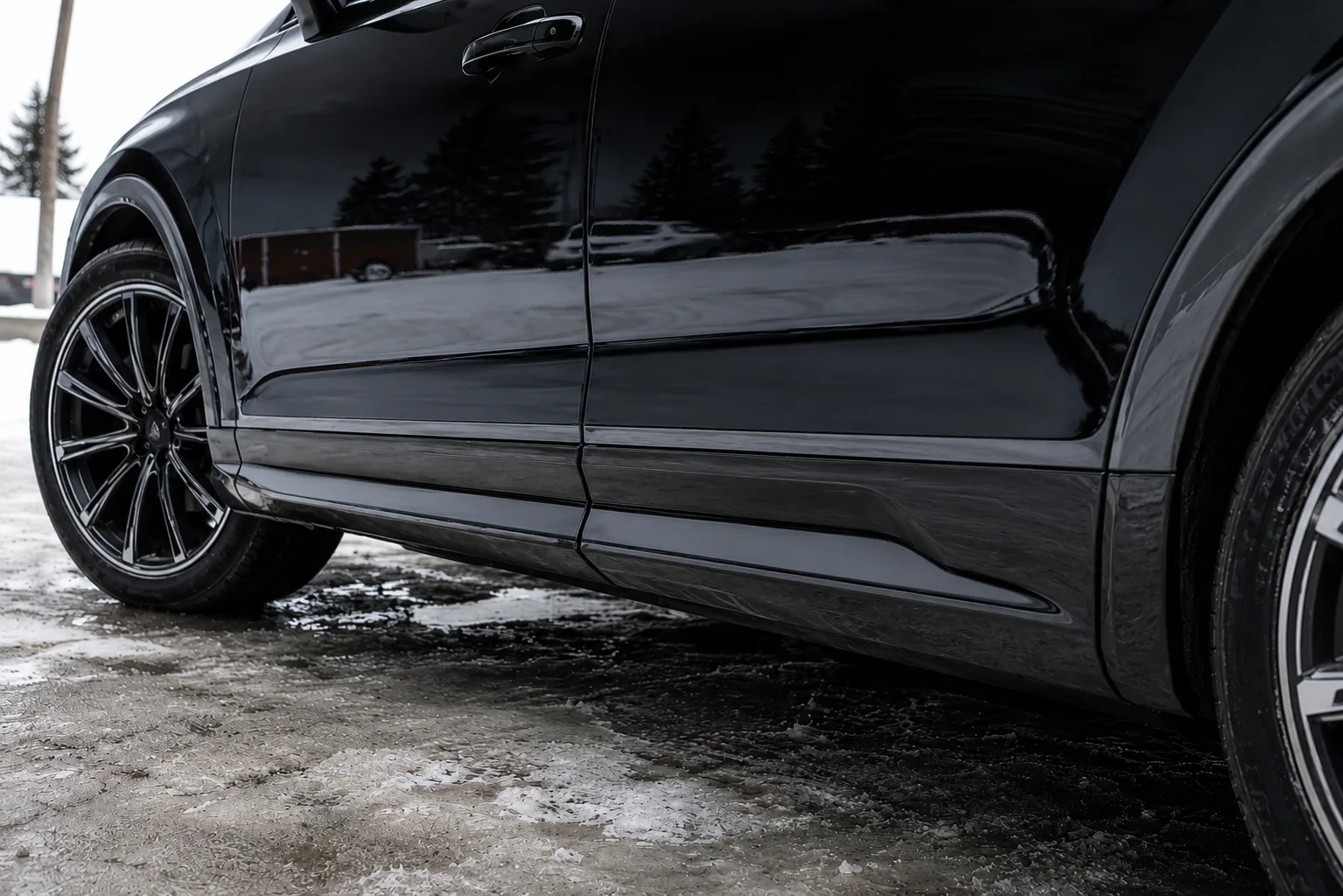 01
01Common target for wet road spray and visible winter film.
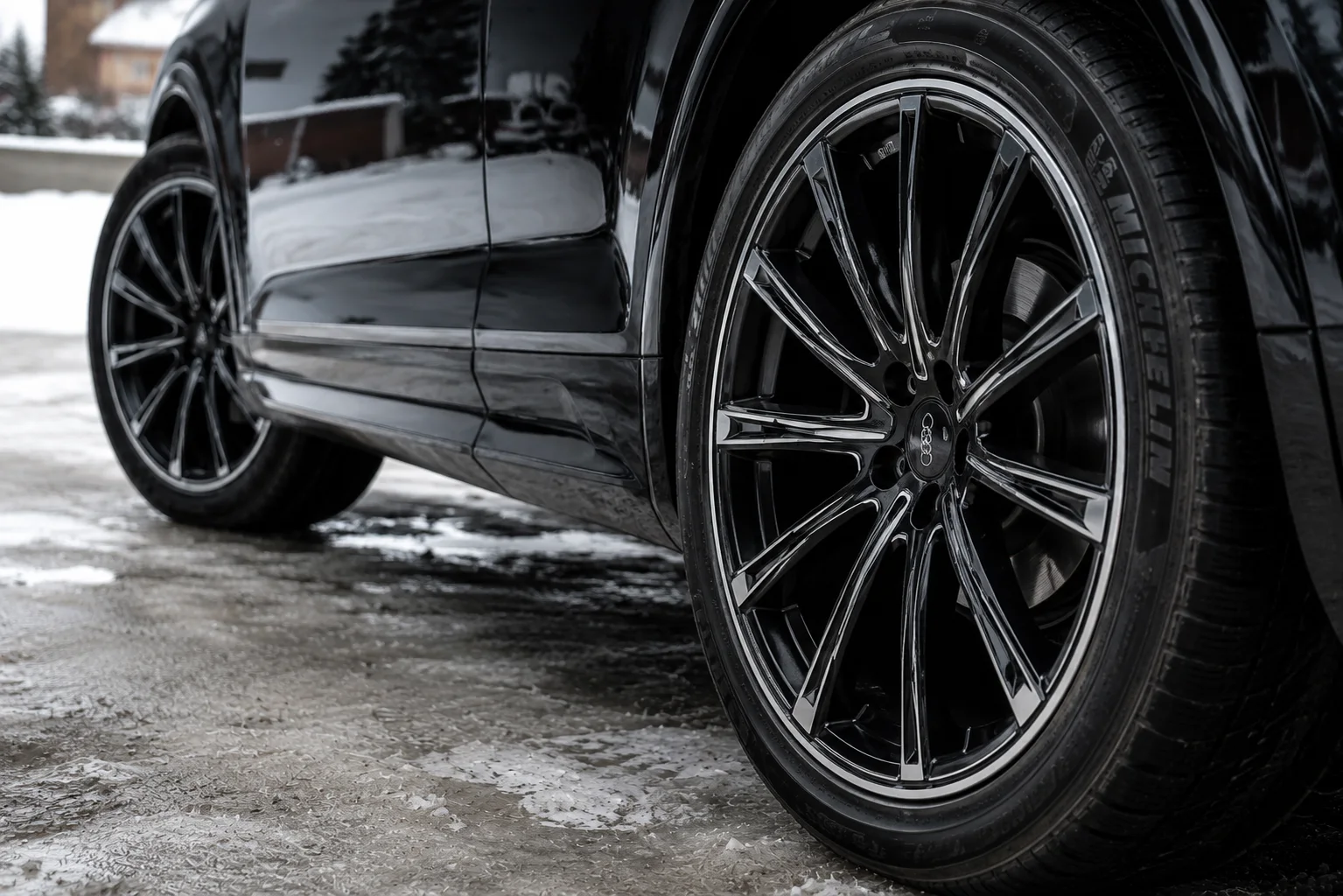 02
02Exposed to road spray, grit and normal brake contamination.
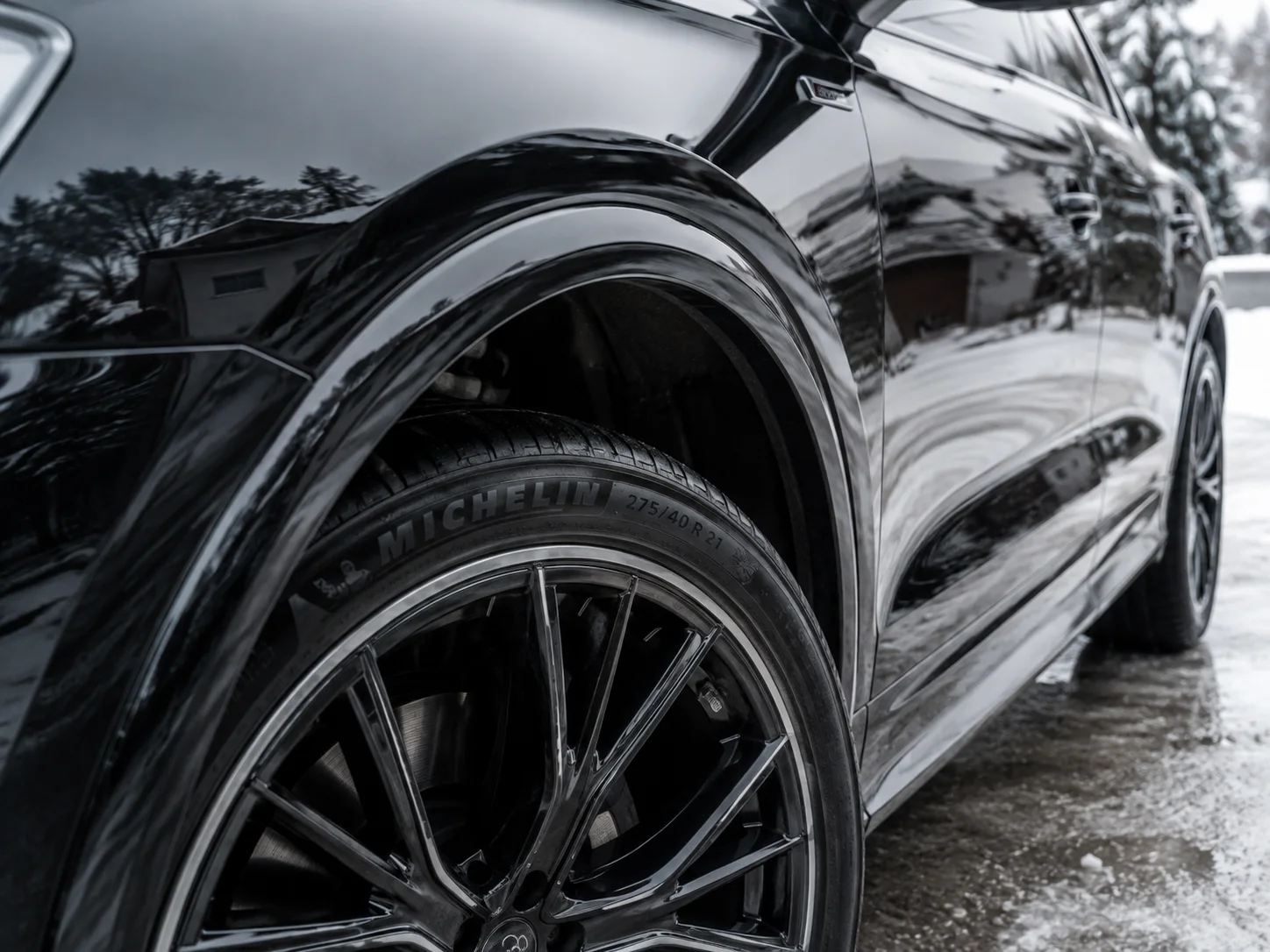 03
03Recessed areas can collect wet winter contamination.
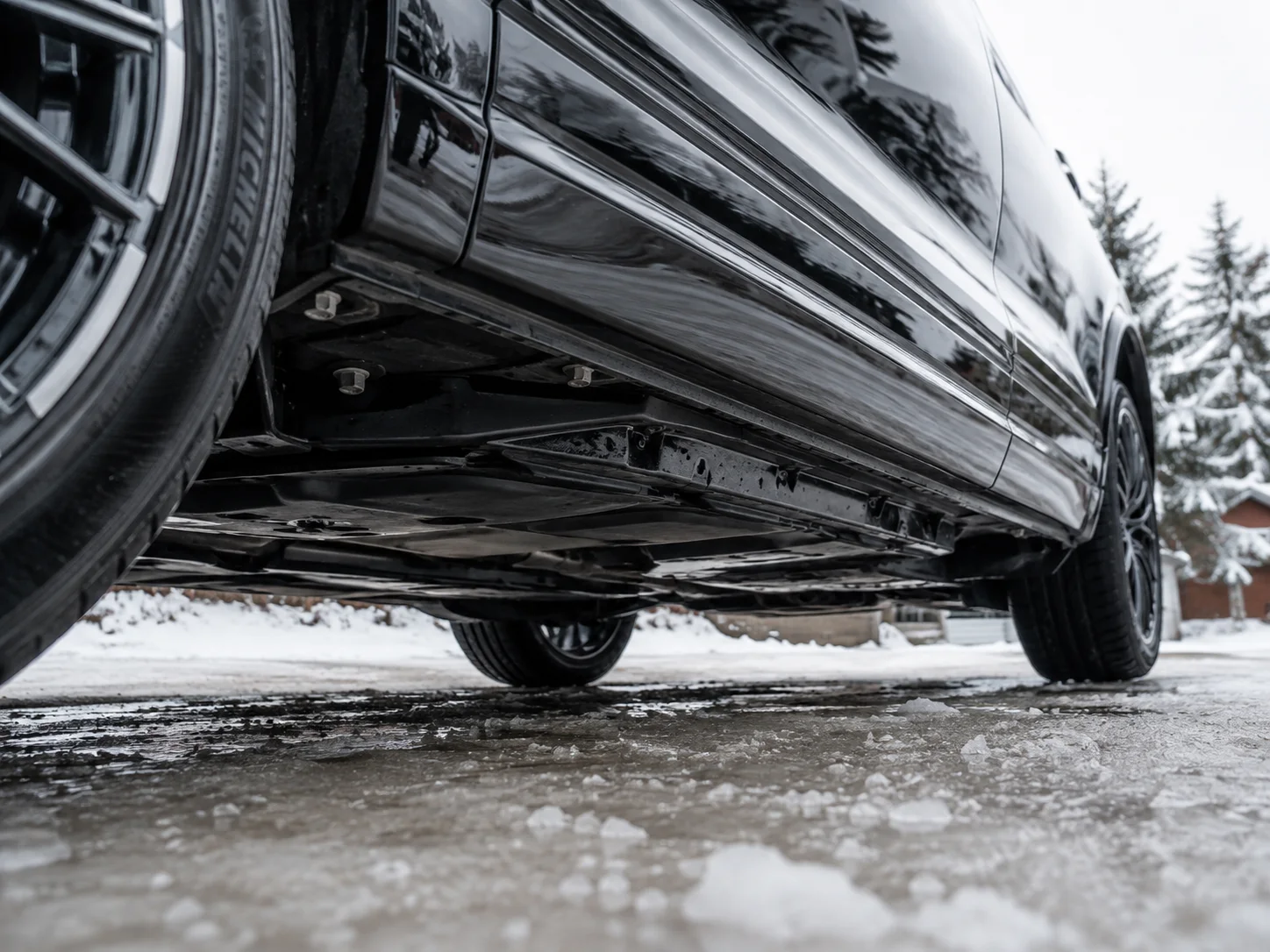 04
04The most important area when discussing chloride exposure and exposed-metal corrosion risk.
Tap each statement for the short answer.
There is no universal DOT rule saying every vehicle must be washed within a specific number of hours. The useful principle is simpler:don’t let heavy winter buildup accumulate indefinitely.
Rinse or wash accumulated winter road film instead of letting it build up for long periods.
Underbody and wheel-well rinsing matter when roads have been treated.
A rainy drive is not the same thing as thoroughly rinsing recessed areas.
A ceramic coating may make painted surfaces easier to clean, but it does not make the entire vehicle salt-proof and it does not replace washing.
What Ceramic Coating Actually Does→Check road conditions, passes, closures and winter-weather alerts before you go.
If your vehicle has heavy road film, dirty lower panels or winter buildup around the wheels, ATW can help with exterior cleaning in the Bonney Lake and Pierce County area.