CAR CARE · INTERIOR CLEANING
Car Interior Extraction: When Is Deep Cleaning Actually Necessary?
You see a stained seat. Do you need extraction — or just a good interior clean? Here is how we decide what is worth doing, what is safe for the material, and what results to expect.
See the cleaning differenceTHE SHORT ANSWER
Not every messy seat needs extraction.
Crumbs, sand and everyday dust? Start with a thorough vacuum and standard interior cleaning. One small mark? A targeted treatment may be enough. When suitable fabric holds heavier buildup, extraction may be worth considering.
The important part is choosing the right treatment for the actual problem — not selling every driver the deepest clean. Old discoloration, wear, or contamination beyond the reachable surface may remain.
THE DIFFERENCE
A clean interior is not one single procedure.
Vacuum
A sensible first step for crumbs, sand and loose dirt. Some debris stays lodged in seams or fabric texture.
Spot treatment
Focuses on one mark rather than soaking an entire seat. It can improve a spot without promising it will disappear.
Shampoo / agitation
Helps address buildup on suitable material; the cleaning method and removal of residue matter.
Spray extraction
Uses solution and suction on suitable fabric. It may help with heavier textile soil, but it is not a cure for wear or damage.
TRY IT · INTERACTIVE
Same seat. Three different outcomes.
Choose a tool and move it across the illustrated seat — or tap a zone below. This example shows three different jobs: vacuuming removes loose debris, spot treatment reduces a localized mark, and extraction can clear a suitable fabric stain. A tear stays a tear.
Illustrative only — this is not a cleaning-result prediction. Actual results depend on the fabric, staining, prior treatment and safe access to the material.
HOW ATW WORKS
What happens when we recommend extraction?
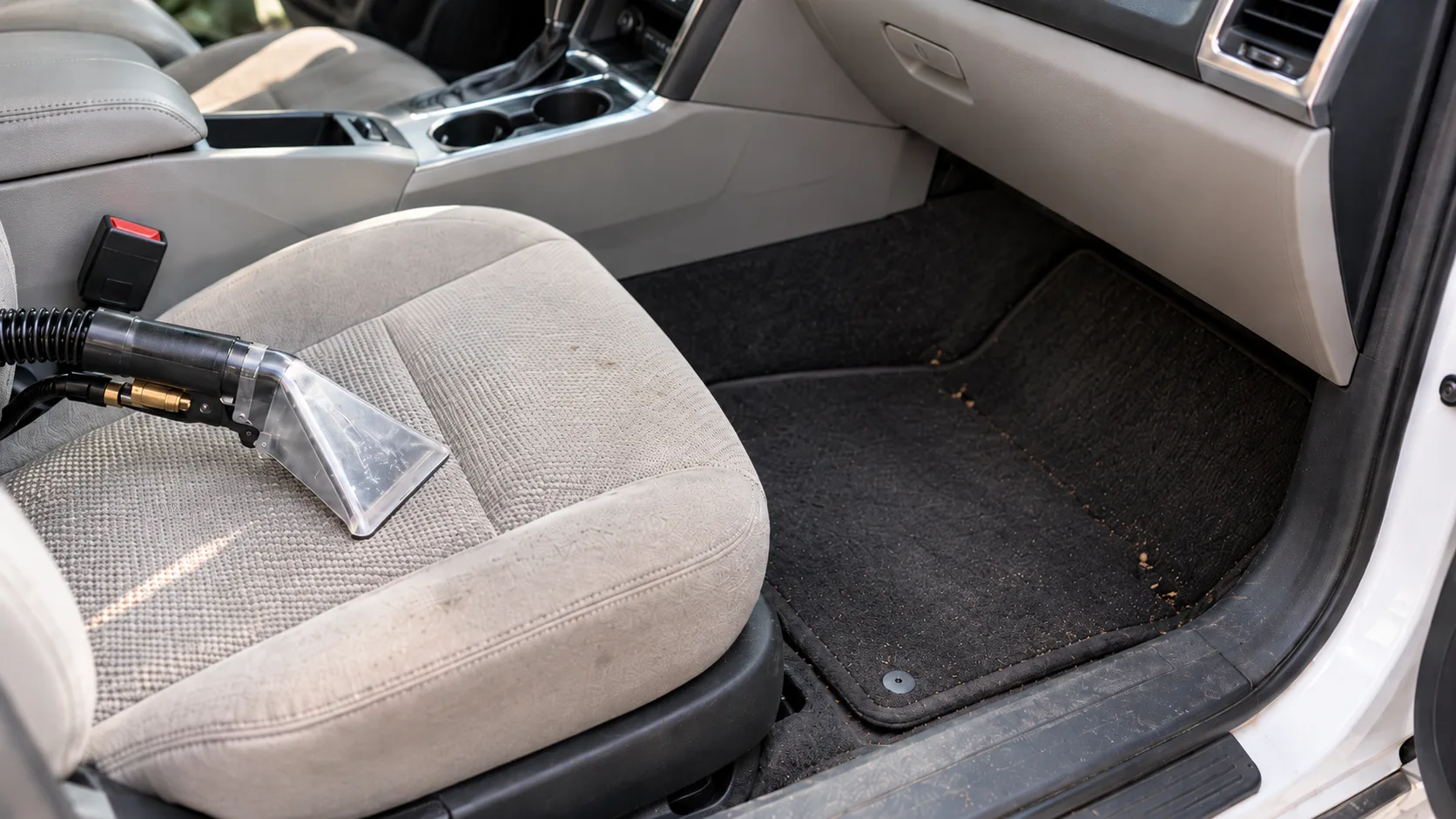
We look at the condition and material first. If extraction makes sense, ATW uses a Kärcher Puzzi 10/1 to apply solution to suitable upholstery and recover moisture with suction. The goal is a thoughtful clean, not an aggressive treatment on every seat.
Kärcher: how upholstery cleaning works ↗WHAT WE DO — AND WHAT WE DON'T
No, we don't extract the seat.
Good news: your seat isn't going anywhere. In detailing, “extraction” means applying cleaning solution to suitable upholstery and using suction to recover it along with loosened soil. We leave the seat exactly where it belongs — in your car.
Fabric Upholstery
We use extraction when the fabric and its condition allow it. Not every stain needs a full wet cleaning; sometimes a focused treatment is enough.
CLEAN ONLY AS DEEPLY AS NEEDEDLeather & Synthetic Surfaces
We clean coated surfaces using an appropriate interior-care method. We don't treat them like washable fabric or flush them with an extractor.
NO FABRIC-STYLE EXTRACTIONAlcantara & Delicate Materials
We take a cautious, material-specific approach. If we cannot safely improve an area, we won't force a treatment just to make it look dramatic.
MATERIAL FIRSTSeats With Built-In Electronics
Modern seats may contain heating, ventilation, sensors and airbags. We avoid unnecessary moisture and methods that could affect sensitive components.
SAFETY BEFORE RESULTSOur approach: We look at the material, the condition and the actual problem before choosing a cleaning method. Our job isn't to use the most aggressive treatment. It's to choose the one that makes sense for your vehicle.
WHEN IS IT WORTH IT?
We recommend the work the car actually needs.
Vacuum and appropriate surface cleaning may be sufficient.
Usually maintenance / Interior careAssess the cause and material. Targeted spot treatment may be more appropriate than whole-seat extraction.
Often assess locally firstProfessional assessment can determine whether suitable upholstery would benefit from extraction.
Consider extraction when appropriateCleaning cannot repair torn upholstery or a water leak. An inspection or specialist repair may be needed.
Do not promise a cleaning fixREAL ATW WORK
Real extraction, not a sales diagram.
This is footage from an actual ATW carpet-cleaning job. It shows the extraction process in action. Automotive carpeting and seat upholstery are different materials, so the exact method depends on what we are working on.
After wet cleaning, drying involves vehicle heat followed by ventilation when conditions allow. Washington weather matters; there is no one-size-fits-all drying time.
Explore Interior Detailing →QUICK ANSWERS
Frequently asked questions.
Does every stain need extraction?
No. Loose soil may only need vacuuming, and some local spots can be treated without extracting an entire seat. The appropriate method depends on the material and contamination.
Is extraction the same as steam cleaning?
No. Spray extraction applies cleaning solution and then vacuums liquid back out. Steam cleaning uses steam and has separate material restrictions.
Can you extract leather or Alcantara seats?
Do not treat all upholstery alike. Check the vehicle manufacturer's instructions and material-specific care guidance. Some textile surfaces allow extraction, while others require different methods.
Will extraction remove every old stain or odor?
No. Results vary with the material, the source and age of contamination, and previous cleaning or damage. Some odor sources lie outside the surface being treated.
How long do seats take to dry?
There is no single reliable drying time for every vehicle. Moisture left behind, ventilation, temperature, humidity and seat construction all affect drying. The vehicle should not be treated as dry until it has been checked.
Related guides: Why odors can return · What is car detailing?
Manufacturer guidance: Toyota interior care · Tesla cleaning · Alcantara care